Home › Bilingual Parenting Strategies › OPOL vs. Minority Language at Home
Compare · Strategies
One Parent One Language vs. Minority Language at Home: Which Fits Your Family
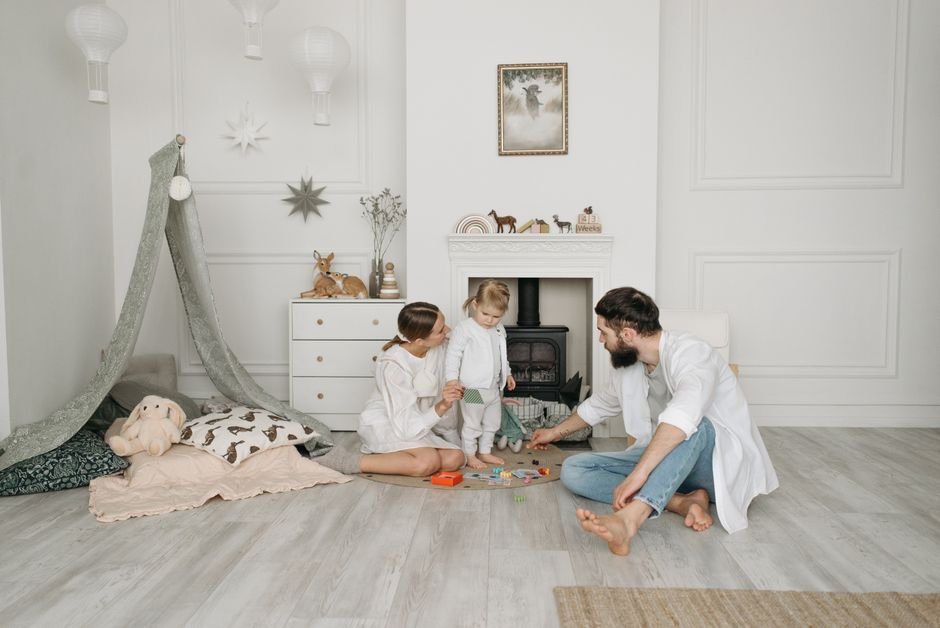
Photo by Pavel Danilyuk on Pexels
Every bilingual parenting forum eventually circles back to the same argument: OPOL or ML@H? A friend of mine spent a week reading conflicting blog posts before messaging me, half-joking, "just tell me which one to pick." I couldn't, because the honest answer is that it depends on things those posts rarely mention — who's actually home, how much energy is left at 6pm, and what your extended family looks like.
This is a side-by-side of the two systems as they actually play out, not as they look on paper.
What OPOL Actually Looks Like Day to Day
One Parent One Language means each parent consistently speaks their own language to the child, regardless of what's being spoken around them. If Dad speaks Korean and Mom speaks English, Dad speaks Korean to the kids always — at the dinner table, in the car, reading bedtime stories — while Mom does the same in English.
It's the most commonly recommended system, and for good reason: it's simple to explain, and the language-to-person association is very clear for a young child. The catch is that it depends entirely on both parents actually holding the line, including in front of other people, which is where a lot of families quietly slip.
What ML@H Actually Looks Like Day to Day
Minority Language at Home flips the boundary from person to place: whichever language is the minority one outside the house becomes the only language spoken inside it, by everyone, regardless of who's talking. If you live in an English-speaking country and Spanish is the minority language, the whole family speaks Spanish at home — parents to kids, kids to parents, even parents to each other.
This tends to produce stronger results for the minority language, simply because the child gets more total exposure to it. It also requires both parents to be comfortable enough in the minority language to use it as the household default, which rules it out for some of the families who'd benefit from it most.
The detail most posts skip: ML@H only works if the majority language is genuinely well-covered outside the home — school, friends, extended community. If it isn't, some families end up needing to consciously top up majority-language exposure too.
Side-by-Side Comparison
| OPOL | ML@H | |
|---|---|---|
| Works if only one parent speaks the language | Yes | No — needs both |
| Typical minority-language exposure | Moderate | High |
| Risk of majority-language gaps | Low | Moderate |
| Easiest to maintain around extended family | Yes | Depends on family fluency |
| Common failure point | Parents drift into majority language when tired | Household reverts under stress or with guests |
How to Choose
In practice, the deciding factor is usually parent fluency, not preference. If only one parent speaks the minority language, ML@H isn't realistically available — OPOL, or a variant of it, is the honest starting point. If both parents share the minority language comfortably, ML@H tends to produce stronger results, provided you're deliberate about majority-language exposure through school and community.
Plenty of families also land on a hybrid: OPOL as the baseline, with agreed minority-language-only stretches — dinner, weekend mornings — layered on top. According to Bilingualism Matters, a research-to-practice initiative at the University of Edinburgh, the specific system matters less than consistency and total quality exposure over time — which matches what most long-term bilingual families report.
Whichever you pick, give it real time before switching. Bouncing between systems every few months tends to confuse the routine more than the language itself.
Whichever system you pick, it needs a schedule
See how OPOL and ML@H actually fit into a normal week with school, work, and tired evenings.
FAQ
Yes, many families do as their comfort with the minority language grows. Expect a short adjustment period while everyone gets used to the new default.
Both systems still work — just define "minority" relative to the language your child hears most outside the home, which is usually the local community language.
It's genuinely effective for many families, as long as the "minority-only" stretches are truly protected and not quietly skipped when things get busy.
Not fundamentally, though the parent who spends more daily time with the child will naturally have more influence on exposure hours under OPOL.
Under either system, this is usually treated as a bonus minority-language boost rather than a disruption — most families simply let the visit run in whichever language the grandparents use.
Ready to put a system into practice?
The weekly schedule post walks through exactly how OPOL or ML@H fits into a real week.
Build your schedule