Home › Bilingual Parenting Strategies › Grandparents and the Language Gap
Original · Strategies
Grandparents Don't Speak the Home Language: How to Keep Them Involved

Photo by Marcus Aurelius on Pexels
My in-laws speak the minority language we're raising our kids in. My own parents don't speak a word of it. For years I quietly worried this created an imbalance — that one set of grandparents would always feel closer, more understood, more "in on it" than the other.
What's actually helped isn't fixing the language gap. It's finding ways for my parents to stay genuinely close to their grandkids that don't depend on shared language at all — while still protecting the exposure the other side of the family naturally provides.
The Real Tension Here
It's not really about vocabulary. Grandparents who don't share the home language can still read stories in translation, play games that need no words, and build a real relationship — the harder part is usually the parent's own guilt about time feeling unevenly split, not an actual barrier to closeness.
Naming that clearly helped us more than any specific technique: the goal isn't equal language exposure from every relative. It's a warm relationship with each of them, using whatever tools fit.
What Actually Helps
- Simple, repeated phrases they learn on purpose. A handful of hello/goodbye/love-you phrases in the language, used consistently, go a long way for warmth even without real fluency.
- Wordless or low-language activities. Building, drawing, baking, sports — plenty of real bonding happens with almost no language needed at all.
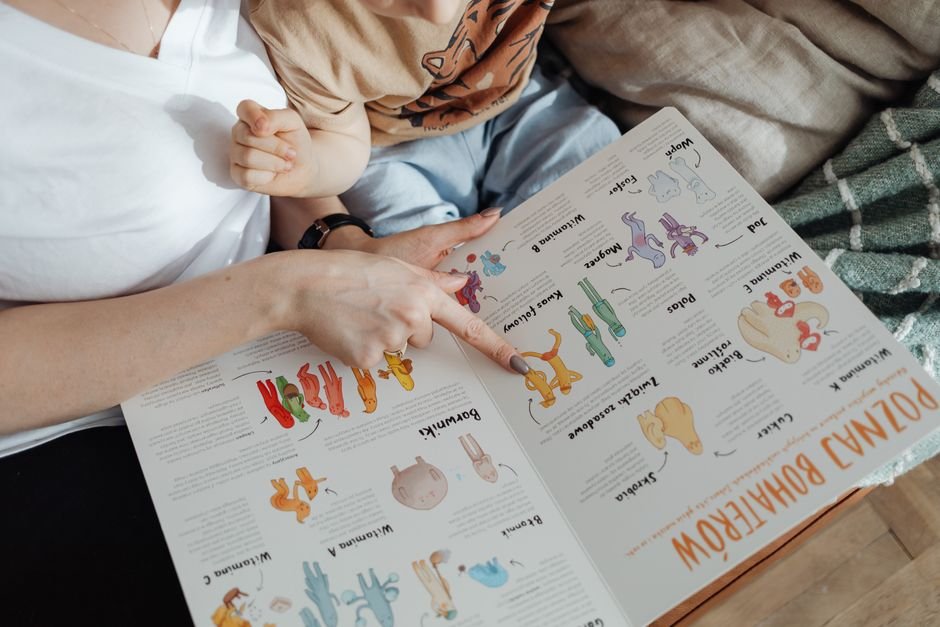
- Bilingual books read together. A grandparent can read the majority-language side aloud while pointing at the same pictures a minority-language book uses, keeping the shared moment even across languages.
- Video calls that include everyone. Even a short call where the minority-language grandparent translates a joke or moment in real time keeps the non-speaking grandparent looped in rather than sidelined.
- Letting your child "teach" them. Kids often love showing a grandparent a new word — it flips the dynamic in a way that builds pride instead of distance.
What surprised me most: our kids don't seem to perceive an imbalance at all. They just have "the grandparents who bake with us" and "the grandparents who read to us in the other language" — different relationships, not unequal ones.
Protecting the Language-Speaking Side Too
The flip side of this is worth naming honestly: grandparents who do speak the minority language are often your single strongest source of natural exposure, and it's worth protecting that relationship deliberately — regular calls, visits, and letting them lead conversations in their language without switching to accommodate others.
According to Bilingualism Matters, extended family who speak the minority language are one of the most valuable, and most commonly under-used, resources available to bilingual families — often more effective than paid resources, simply because the relationship motivation is already there.
Turn those calls into a real weekly habit
See how scheduled family calls fit into the rest of a realistic weekly routine.
FAQ
A handful of simple phrases can be a lovely gesture, but it's reasonable not to expect real fluency — the relationship can thrive without it.
Reframing it as different relationships rather than unequal ones tends to help, since kids themselves usually don't experience it as a hierarchy.
That's usually the most natural choice, and it's fine — it doesn't undercut the minority language, since it isn't the primary source for that relationship anyway.
Scheduled, regular video calls become even more important here — distance makes consistency matter more, not less.
Not replace, but they're a genuinely useful bridge — they give a shared activity that works regardless of which languages each person speaks.
Ready to make those calls a fixed habit?
See where scheduled family calls fit into a realistic weekly routine.
Read the weekly schedule