Home › Bilingual Parenting Strategies › Code-Switching in Kids
Know · Strategies
Code-Switching in Kids: Normal Development or a Sign to Slow Down
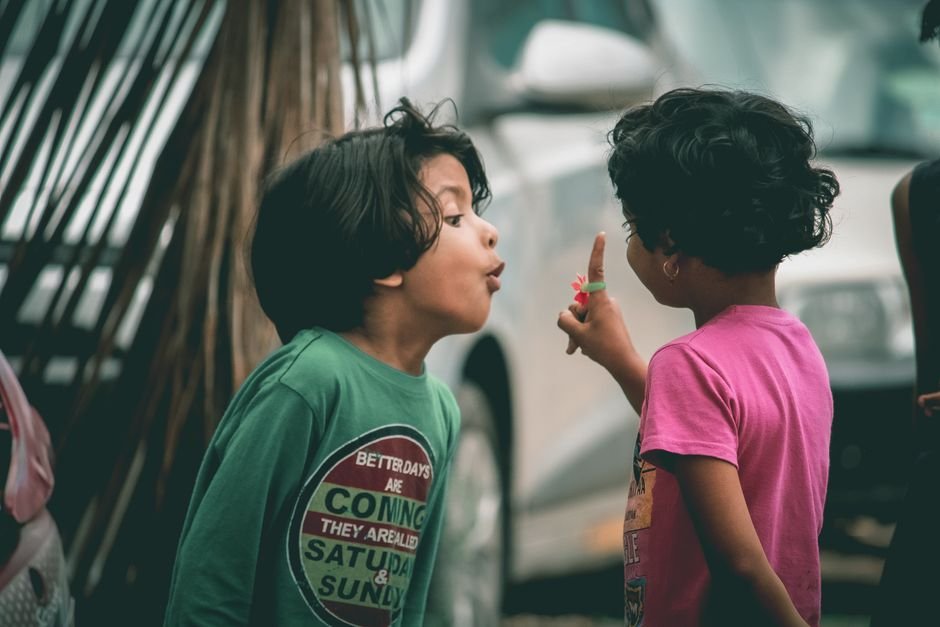
Photo by Sandeep Singh on Pexels
My daughter once told me, mid-sentence, that she wanted "más leche, please" — switching languages twice inside four words without noticing. A well-meaning relative watching this happen asked if we should be worried she was "getting them mixed up." She wasn't. She was doing something linguists have a name for, and it isn't a problem.
Code-switching — moving between two languages within a single conversation or even a single sentence — is one of the most common and most misunderstood behaviours in bilingual childhood.
What Code-Switching Actually Is
Code-switching is the practice of alternating between two languages, sometimes within the same sentence, often to fill a gap, add emphasis, or simply because one language has the more natural word for the moment. Adults who are bilingual do it constantly too — it's not a childhood-only quirk, and it's not evidence of confusion.
Linguists generally treat it as a sophisticated skill rather than an error: it requires a speaker to track two grammatical systems at once and switch between them smoothly, which is a fairly advanced cognitive feat, not a sign that either language is weak.
Why Kids Do It
Children code-switch for a few common reasons: they don't yet have a word in one language so they borrow it from the other, a particular word simply fits the sentence's rhythm better, or they're mirroring what they hear from bilingual parents who do the same thing constantly at home.
It also tends to increase, not decrease, as vocabulary grows in both languages — which is the opposite of what worried parents often expect.
When It's Completely Normal
Most code-switching in bilingual kids falls into a few predictable, harmless patterns:
- Borrowing a single word when the equivalent hasn't been learned yet in the other language.
- Switching to match the language of whoever they're addressing mid-conversation.
- Mixing more when tired, excited, or distracted — the same way adults default to their strongest language under pressure.
- Using set phrases or expressions that simply don't translate cleanly, borrowed wholesale from one language into the other.
The reassuring pattern: code-switching in these contexts usually decreases naturally as vocabulary in both languages grows, particularly once a child starts distinguishing which language a specific listener understands.
When It's Worth a Closer Look
Code-switching itself is rarely a red flag on its own. What's worth mentioning to a pediatrician or speech-language pathologist is a different pattern: significant difficulty forming complete sentences in either language, not just borrowing occasional words between them, especially past the age of four or five.
The Linguistic Society of America and the American Speech-Language-Hearing Association both distinguish clearly between code-switching, which is a typical bilingual skill, and genuine language delay, which shows up as broader difficulty communicating regardless of which language a child reaches for.
Noticing more mixing lately?
If your child seems to be favoring one language socially, this post on refusal covers a related, but different, pattern.
FAQ
No — it's generally a sign of comfort moving between two systems, not a gap in either one. True gaps look more like difficulty forming complete thoughts in both languages, not just borrowing words.
Generally not necessary — gentle modeling (repeating the idea back in one language) tends to work better than frequent correction, which can discourage a child from talking at all.
Kids are usually quick to adjust their language to their audience once they're aware someone doesn't understand a given language — this is itself a skill that develops with practice.
Not necessarily — it often reflects vocabulary gaps that are completely normal at a given age and close naturally as exposure continues.
It varies, but many children show more audience-appropriate language use by early school age, as they become more attuned to who understands which language.
Curious about a related pattern?
See what to do if your child starts favoring one language socially over the other.
Read the next post